
Barley Chatu (Sattu) - A Wholesome Delight
· 4 min read · By Store Owner
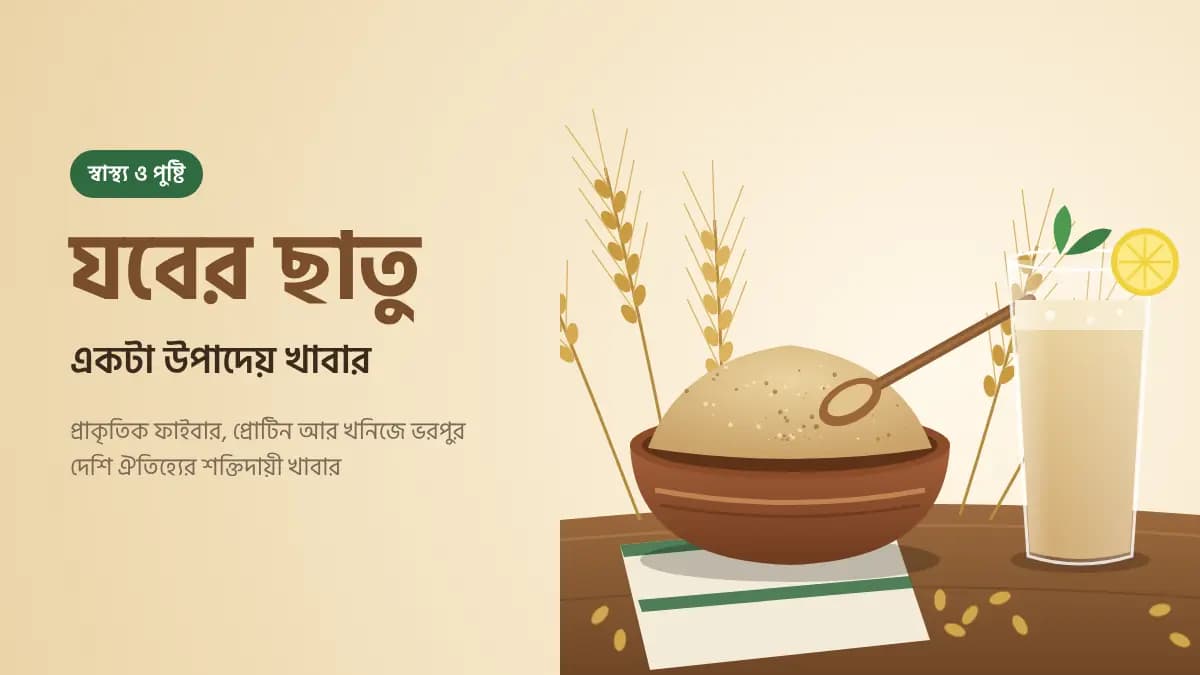
A chilled glass of chatu sharbat on a hot afternoon, or a quick bowl of chatu mixed with milk on a busy morning — this humble food has been part of Bengali kitchens for generations. Many of us have forgotten it amid fast food, yet nutritionally, barley sattu (jober chatu) can hold its own against any modern "health food". Here is what it is, why you should eat it, who it suits and the best ways to enjoy it.
What is barley chatu?
Barley is one of the world's oldest grains. Whole barley is cleaned, sun-dried and dry-roasted in a pan or hot sand until lightly golden. The roasted grain is then stone-ground or milled into a fine flour — that is barley chatu (sattu). Because it is already roasted, it needs no cooking: just mix it with water, milk or yogurt. It has a mild nutty aroma and an earthy, slightly sweet taste.
Across Bangladesh, West Bengal, Bihar and northern India, chatu has long been the "easy energy food" of farmers, labourers and travellers. Like gram (chickpea) sattu, barley sattu is popular too — but it is richer in fibre and famous for keeping the body cool.
Nutrition facts
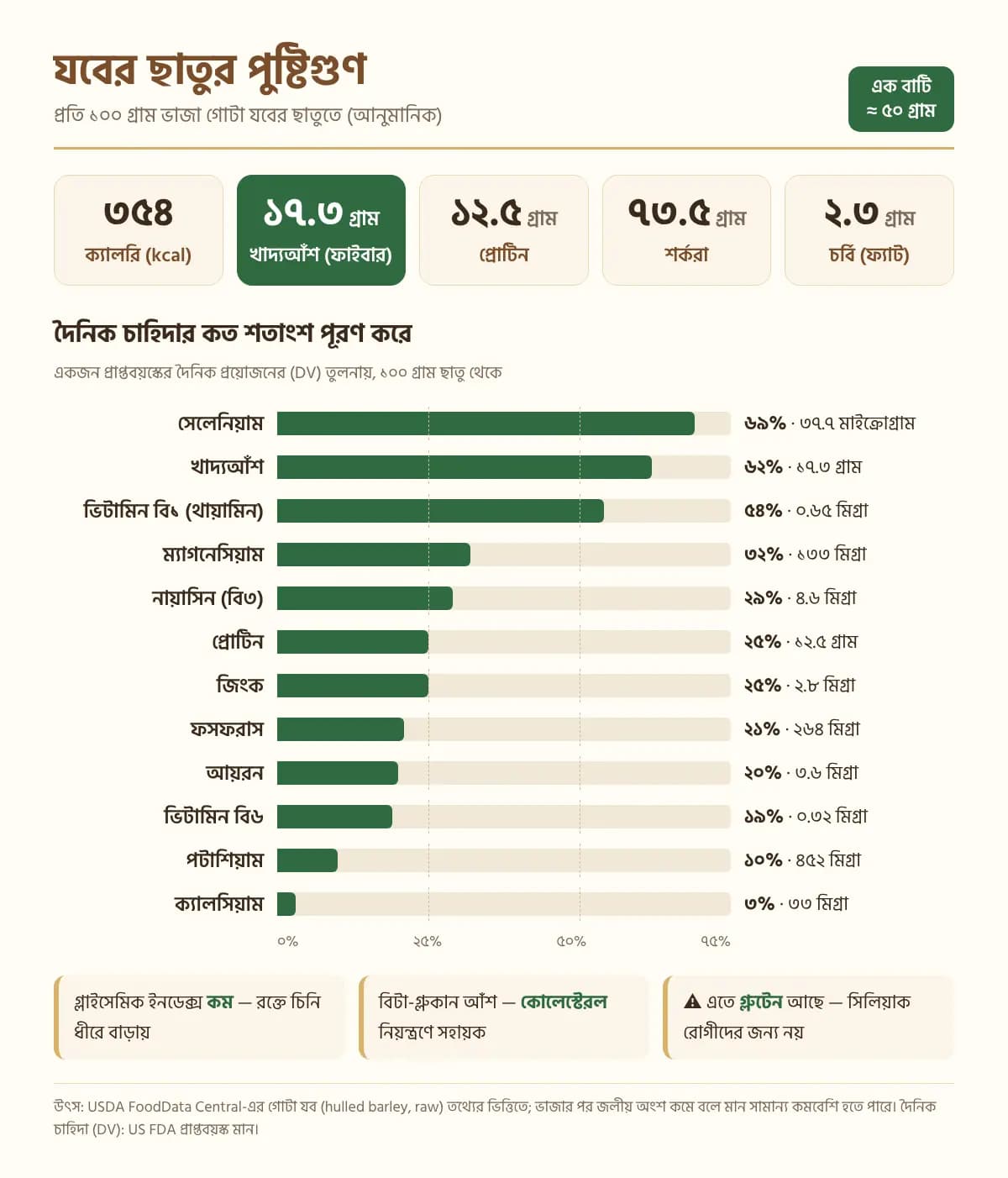
The chart below shows the nutrients in 100 g of barley chatu and how much of an adult's daily value they provide.
At a glance (per 100 g, approximate):
Energy: 354 kcal
Dietary fibre: 17.3 g — about 62% of daily value
Protein: 12.5 g
Carbohydrate: 73.5 g (mostly complex carbs)
Fat: only 2.3 g
Selenium: 37.7 µg (~69% DV)
Vitamin B1 (thiamin): 0.65 mg (~54% DV)
Magnesium: 133 mg (~32% DV)
Iron: 3.6 mg, Zinc: 2.8 mg, Phosphorus: 264 mg, Potassium: 452 mg
Source: USDA FoodData Central values for whole (hulled) barley. Roasting removes some moisture, so actual values in chatu may vary slightly.
Why eat barley chatu?
Keeps you full longer: its high fibre digests slowly, curbing hunger and overeating.
Steadier blood sugar: barley has a low glycaemic index, so it does not spike blood sugar.
Helps manage cholesterol: barley's soluble fibre, beta-glucan, has been shown in studies to help lower LDL ("bad") cholesterol.
Better digestion: insoluble fibre keeps the gut moving and feeds beneficial bacteria.
Cools the body: chatu sharbat refreshes and helps with hydration on hot days — a true "desi energy drink".
Natural, steady energy: complex carbs release energy slowly, and vitamin B1 helps turn food into energy.
Cheap and effortless: no cooking, low cost — a nutritious meal in two minutes.
Who should eat it?
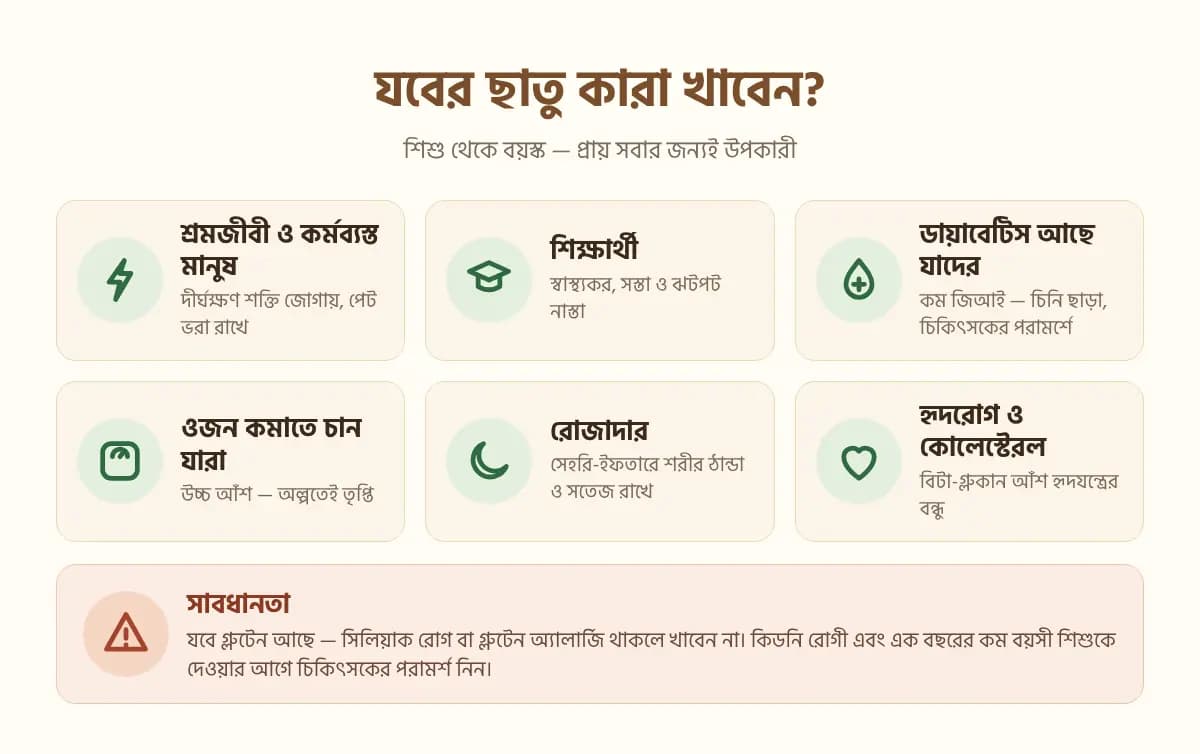
Barley chatu suits almost every age group, especially:
Labourers and busy professionals who work long hours with little time for heavy meals.
Students needing a healthy, cheap breakfast or tiffin.
People with diabetes — without sugar, in moderation and as advised by a doctor.
Anyone trying to lose weight — high fibre means satisfaction with less.
People fasting — at sehri it keeps hunger away; at iftar the sharbat cools you down.
Older adults and those at risk of heart disease — soft, easy to digest and cholesterol-friendly.
How to eat it
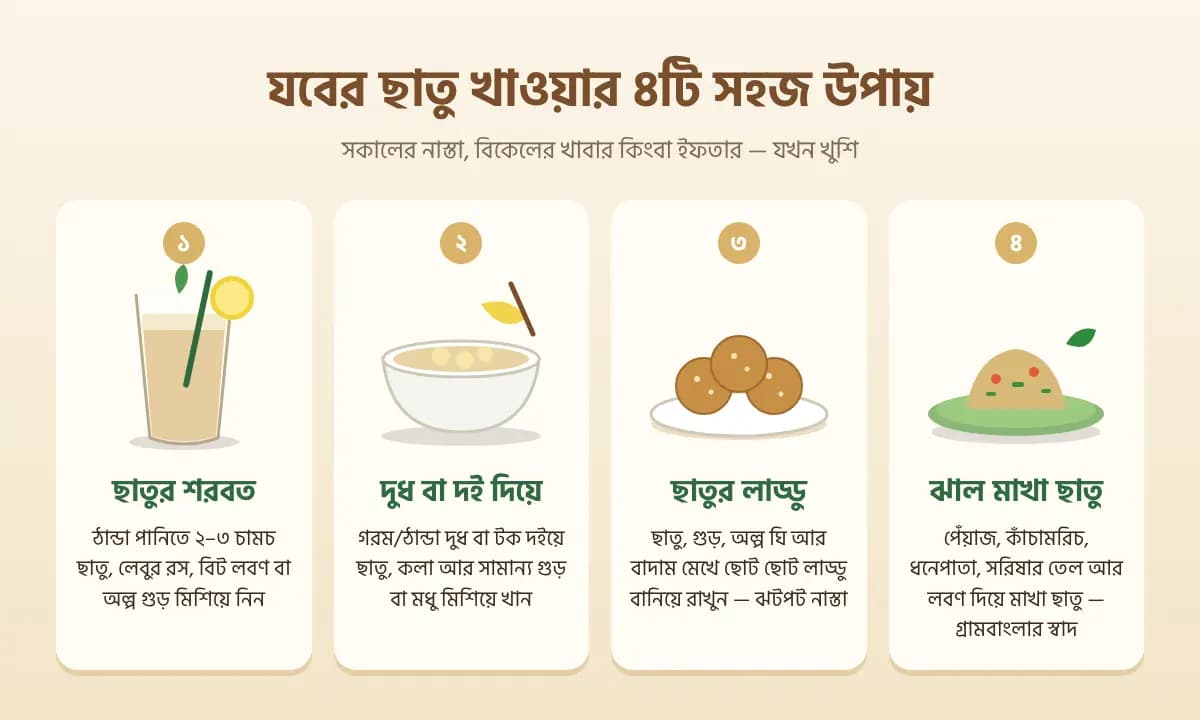
1. Chatu sharbat (the classic)
Add 2–3 tablespoons of barley chatu to a glass of cold water.
Add the juice of half a lemon and a pinch of black salt or regular salt. For sweetness, add a spoon of jaggery.
Stir well to break lumps. Top with chopped mint and roasted cumin powder if you like.
2. With milk or yogurt
Mix 3–4 spoons of chatu into a cup of milk (warm or cold) or yogurt with a mashed ripe banana and a little jaggery or honey — a thick, nourishing breakfast.
3. Chatu laddu
Knead one cup of chatu with half a cup of melted jaggery, 1–2 spoons of ghee and chopped nuts, then roll into small balls. They keep 7–10 days in an airtight jar — perfect for kids' lunchboxes.
4. Spicy mashed chatu
Mix chatu with chopped onion, green chilli, coriander leaves, a spoon of mustard oil, salt and a splash of water. A rustic, savoury taste of rural Bengal.
How much to eat and how to store it
30–50 g (3–5 tablespoons) a day is enough for adults; about half that for children.
Because it is high in fibre, drink plenty of water with it.
Store in a dry, airtight container. Moisture makes it lumpy and stale. Stored well, it keeps for 2–3 months.
Precautions
Barley contains gluten. Avoid it if you have coeliac disease or gluten intolerance.
Eating a lot suddenly can cause gas or bloating — start small.
People with kidney disease (because of potassium and phosphorus) and children under one year should consult a doctor first.
People with diabetes should skip sugar and go easy on jaggery.
Final word
Barley chatu is not an imported superfood — it is our own, rooted in our soil and tradition. Affordable, easy and packed with nutrition, a daily serving gives your body natural energy and your heart a taste of childhood. Start today with a glass of chatu sharbat!
Note: This article is for general information. If you have a specific health condition, consult a doctor or nutritionist before changing your diet.